The decision a pit crew is actually making
Do we pack up and move to the next pit, or do we stay?
Get it wrong one way and the racer rolls in to an empty pit with nobody on the fuel can. Get it wrong the other way and the crew burns an hour sitting at a pit he went through twenty minutes ago.
On a 255-mile course with no phone signal, that call gets made on a guess and a wristwatch.
Why the organizer’s tracker doesn’t help
It answers a different question. It shows where the racer is.
The crew doesn’t need a dot. They need to know whether they can get there first. That’s a question about two points and the course between them, asked from where the crew is standing — not from race control.
What the crew sees instead
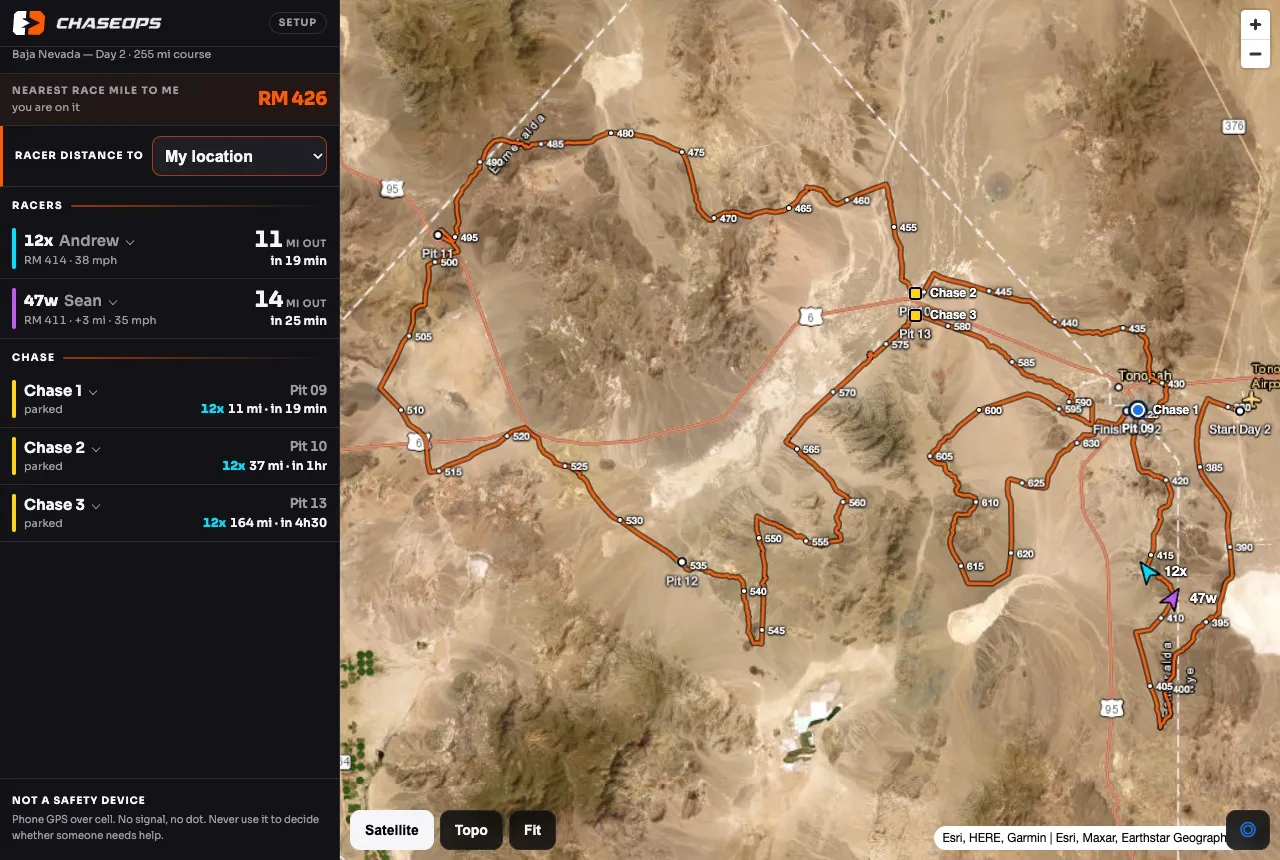
Every racer and every chase rig, ranked like a running order. Beside each one: how many miles out he is, and what time he arrives.
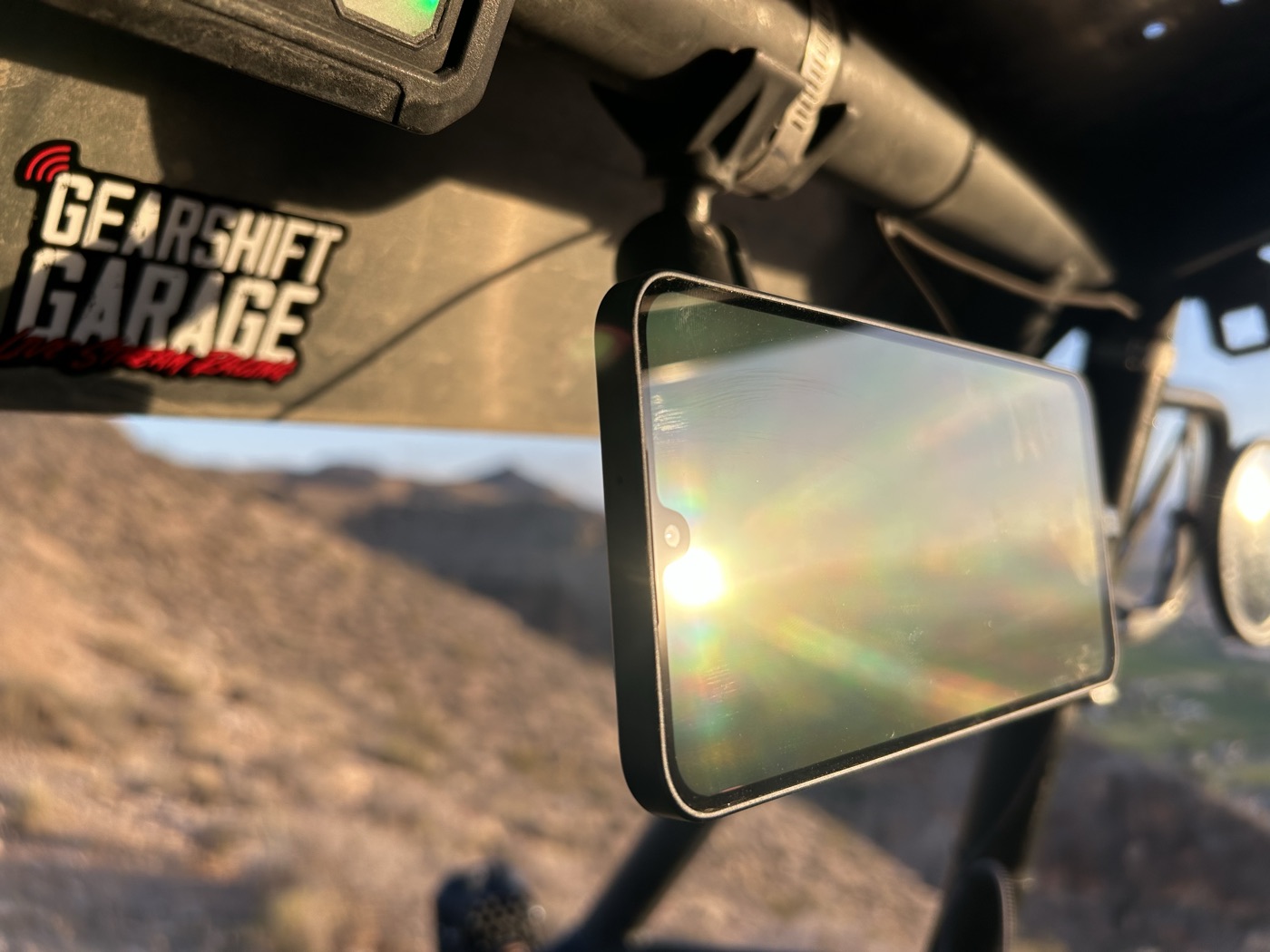
Not coordinates. Not a dot to squint at. Numbers big enough to read at arm’s length, in the sun, through a dusty screen, by someone with one hand on a fuel jug.
What it means for the racer
A pit that’s ready when he gets there.
He can’t call ahead and he can’t check anything. The only version of this that works for him is the one where the crew already knew.